ارزیابی روشهای هیدروژئولوژیک برای حفاظت برمبنای باستانسنجی در موزۀ عصر آهن تبریز
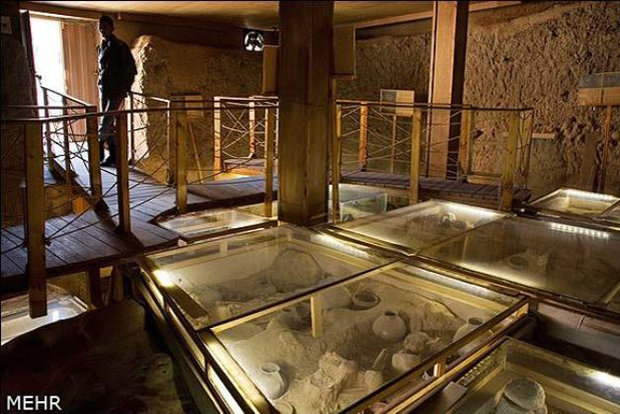
آسیب آثار فرهنگی پس از کشف، در اثر عوامل گوناگونی رخ میدهد. یکی از این موارد آسیبزا، رطوبت منشأ گرفته از آبهای زیرزمینی است که بهصورت رطوبت خاک ظاهر شده و در گذر زمان بهعلت فرآیند شیمیایی و املاح و یونهای موجود در آب و همچنین pH ناسازگار محیط با بافت و ساخت آثار فرهنگی موجب تشدید فرآیند تخریب میگردد. در راستای رسالت علم باستانسنجی بهعنوان پلی میان علم باستانشناسی و سایر علوم، در این مطالعه از هیدروژئولوژی در راستای حفاظت از آثار باستانی استفاده میشود. موزۀ عصر آهن تبریز در محدودۀ مرکزی شهر و درمیان رسوبات جوان کواترنری که تشکیلدهندۀ سفرۀ آب زیرزمینی آزاد تبریز هستند، واقعشده است. آب زیرزمینی از عوامل اصلی تحمیل فرسودگی و بروز واپاشی در استخوانهای موجود در این سایتموزه بهشمار میروند. این مطالعه با استفاده از دادههای موجود در محدودۀ مطالعاتی که برگرفته از پروژۀ قطار شهری تبریز و دادههای اخذ شده از شرکت آبمنطقهای آذربایجان شرقی است، صورت گرفت و با استفاده از روشهای رایانهای، مقادیر مناسب پمپاژ آب را باتوجه به اُفت بهینۀ سطح آب شبیهسازی کرده و محل قرارگیری استخوانها را در موقعیت خشک تعریف میکند. استفاده از علوم جدید برای مقاصد باستانسنجانه هدف اصلی این مطالعه بوده و سعیبر این است تا با ایجاد این ارتباط به رفع معضل تخریب استخوانهای باستانی پرداخته شود؛ نتایج نشان میدهند که با توجه به راهکارهای گوناگونی که در هیدرولوژی برای پایین انداختن محلی آب سفرهها وجود دارد، اما باتوجهبه مختصات مکانی و ملزومات فنی محوطۀ مورد مطالعه، بهترین روش استفاده از پمپاژ آب زیرزمینی است. متأسفانه تخریب رطوبتی استخوانهای کشفشده در موزۀ عصر آهن تبریز تاکنون باعث واردآمدن آسیبهای جدی به این بقایای ارزشمند تاریخی شده و تاکنون اقدام اساسی برای ممانعت از ادامه این فرآیند صورت نگرفته است.
واژههای کلیدی: موزۀ عصر آهن تبریز، آبهای زیرزمینی، چاه پمپاژ، حفاظت، رطوبت خاک.
جانانی صنم، رازانی مهدی، ابراهیمی هادی.(۱۴۰۴). ارزیابی روشهای هیدروژئولوژیک برای حفاظت برمبنای باستانسنجی در موزۀ عصر آهن تبریز مطالعات باستانشناسی پارسه ۹ (۳۲) :۹۳-۶۵ ۱۰,۲۲۰۳۴/PJAS.۹۲۴....... دانلود اینجا
----------------------------------------------------------------------------------------------------------------------------------------------------------------------------------
Evaluation of Hydrogeological Methods for Conservation Based on Archaeometric Principles at the Tabriz Iron Age Museum
Damage to cultural artifacts after discovery occurs due to various factors. One of these harmful cases is moisture originating from underground water, which appears as soil moisture, and over time, due to the oxidation process and the salts and ions in the water, as well as the incompatible pH of the environment with the texture and construction of the artifacts, it aggravates the process of destruction. In line with the mission of archaeometry as a bridge between archeology and other sciences, hydrogeology is used in this study in order to protect ancient artifacts. Iron Age Museum of Tabriz is located in the central area of the city and among the young Quaternary sediments that form the free aquifer of Tabriz. Underground water is one of the main factors causing corrosion and decay in the bones in this museum site. There are various solutions for lowering the water table locally, which according to the location coordinates and technical requirements of the site, the best method is to use underground water pumping. In this study, by using the available data in the study zone which is taken from the Tabriz urban train project and the data obtained from the Regional Water Company of East Azerbaijan, by using computer methods, the appropriate amounts of water pumping have been simulated according to the optimal water level drop and We define the placement of bones in a dry position. The use of new sciences for archeometric purposes is the main goal of this study and an attempt is made to solve the problem of destruction of ancient bones by establishing this connection. Keywords: Conservation, Groundwater, Pumping Well, Soil Moisture, Tabriz Iron Age Museum.
Introduction The discovery of ancient bones belonging to the Iron Age of the first and second millennium BC in the area of Tabriz Blue Mosque in 1997 is an important event in the field of archeology and ancient anthropology in Azerbaijan. When this ancient area has been discovered, studies have been carried out in the fields of dating about these bones and studies related to the origin and the migration (Kasiri, 2019) and the conservation and restoration of the graves in the Iron Age Museum area in 2016 was carried out by Majidi and Razani. In recent years, the effect of humidity on buried organisms in the soil has been the subject of many researchers’ studies. Soil moisture can play an important role in decomposition (Swift et al, 1979). Fluctuations of groundwater in the soil is one of the most important factors affecting microbial activity in the field conditions (Lund and Goksoyr, 1980). Iron Age Museum of Tabriz is located in the central area of this city and among the young Quaternary sediments that form the unconfined groundwater aquifer of Tabriz. Tabriz aquifer has an alluvial nature, which has expanded as a result of the Mehran Rood River flowing in its ancient path and creating numerous meanders during geological time. Hydrogeology as a new branch of earth sciences and engineering studies the condition, behavior and hydrological characteristics of the layers of the earth. As a porous environment, the basement contains soil grains, and the empty space between these grains can be saturated with water and provide a path for the flow of groundwater. The voracity of water movement in the basement compared to the surface currents is very low and varies from a few centimeters per year to several meters per day. Due to passing through various minerals and rocks, groundwater often has a significant amount of different solutes and has relatively high electrical conductivity (E.C). These solutes can cause a lot of damage to cultural works by sedimentation or crystallization in case of evaporation of groundwater. The climatic conditions of each region are different in the occurrence of damaging moisture factors and their effects in different seasons of the year (Nawai, 2016). The amount of humidity in the environment, which can cause destruction due to freezing with the participation of the temperature change parameter, will cause serious damage due to the transport of new solutes and sedimentation at each stage and the recrystallization of previous sediments. In addition to the above, the penetration of moisture through underground water can change the pH of the environment, and this change causes the destruction of cultural works by increasing the acidity.
Discussion Iron Age Museum of Tabriz, as a result of its archaeological excavations, 108 graves were identified, based on the typology of pottery and metal artefacts and the method of burial and comparing them with the collections discovered from the excavations of Hassanlou Hill and Dinkhah Tepe, dating from around 1200 to 800 BC and the period of Iron Age I and II have been estimated for them, which of course is relatively consistent with the results of carbon 14 dating of these sites (Hojbari Nubri, 1381 and 1383). Its cultural, historical, social and economic nature, along with the aesthetic quality and historical and cultural importance of that area; The type of constituent materials and the composition and method of construction of the works found in it, the value, validity and information and messages hidden in those findings and how they are used are valuable documents of its cultural heritage collection. These works, mainly from archaeological excavations, have been obtained over several years, and their preservation in relatively inappropriate conditions has led to the progress of damage caused by the burial of these objects in the ground, and after a rather long period of time, they will disappear (Bagherzadeh Kasiri, 2016, 8). Based on the studies of Tabriz Urban Railway line 1, water level data is available near the study area of Asr Ahan Museum site, and according to the principle that the groundwater level almost follows the topography, it is possible to estimate the groundwater level in The location of the museum was found. For this purpose, the water level data was collected in the study boreholes near the study area (Table 8) and the map of the ISO lines of ground water in the study area was drawn (Figure 10). It is necessary to explain that ISO lines or equipotential lines of groundwater are curves on each of these curves, the level of ground water has the same values and the map of parallel lines shows the changes of the level of ground water in the study area. It is possible to draw this type of map both manually and by using software that allows for interpolation and drawing. Next, modeling of groundwater drawdown due to pumping from the extraction well was done using GMS software version 16.4. For archeological stratification, before installing the drilling machine, a manual well should be dug to the desired diameter and to the depth of the ground water, and after reaching the depth of the underground water, the drilling machine will continue drilling from inside this well until it hits The stone should be foamed (Figure 21).
Conclusion The Iron Age Museum site of Tabriz is one of the prominent sites in the northwest of the Iran, which is facing major problems due to the groundwater infiltration. This research uses information and data of the studies of the aquifer of this region with taking account to the problem of how to intervene in the ancient sites. It has provided a solution to deal with the problem of groundwater in order to reduce its flow, and in this regard, by introducing the place of preliminary evaluations using speculation and Finally suggests a piezometric well to start working in this area and control the groundwater level. Noting that the change of seasons and amount of rainfall can affect the condition of groundwater to some extent; Therefore, by changing the flow rate and duration of pumping, other values of drawdown can be achieved. For this reason, it is suggested that if the plan is implemented, a piezometer well should be drill as close as possible to the museum site so that the condition of the groundwater as well as the amount of its draw done due to pumping from the extraction well can be under immediate control. To prevent the water used in the green space and other uses of the museum site from returning to the area of ancient graves, drainage channels should be used between the area and the main space of the museum. Keywords: Conservation, Groundwater, Pumping Well, Soil Moisture, Tabriz Iron Age Museum.
Janani S, Razani M, Ebrahimi H. (2025). Evaluation of Hydrogeological Methods for Conservation Based on Archaeometric Principles at the Tabriz Iron Age Museum. Parseh J Archaeol Stud. 9(32), 65-93. doi:10.22034/PJAS.924 URL: http://journal.richt.ir/mbp/article-1-924-en.html


 Welcome to the blog of Dr. Mehdi Razani, an expert in the conservation and archaeometry of cultural heritage. Here you will find his latest writings and articles related to the fascinating fields of Iran's art and cultural heritage sciences. Join us on this thrilling journey